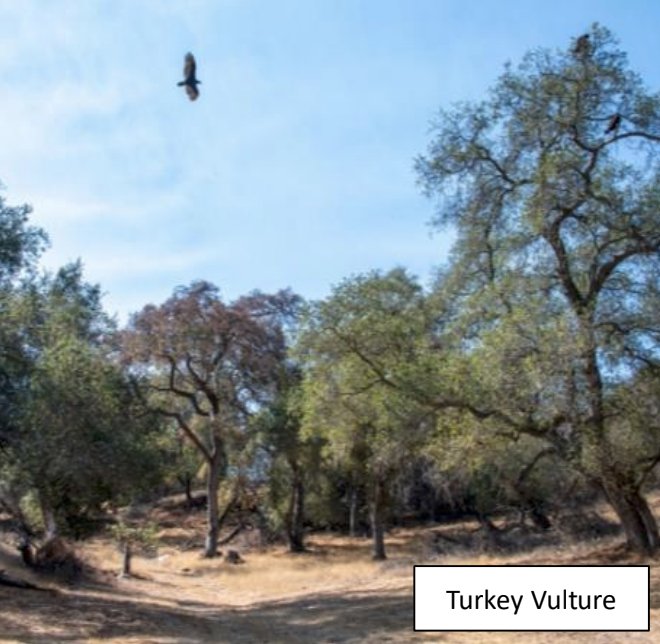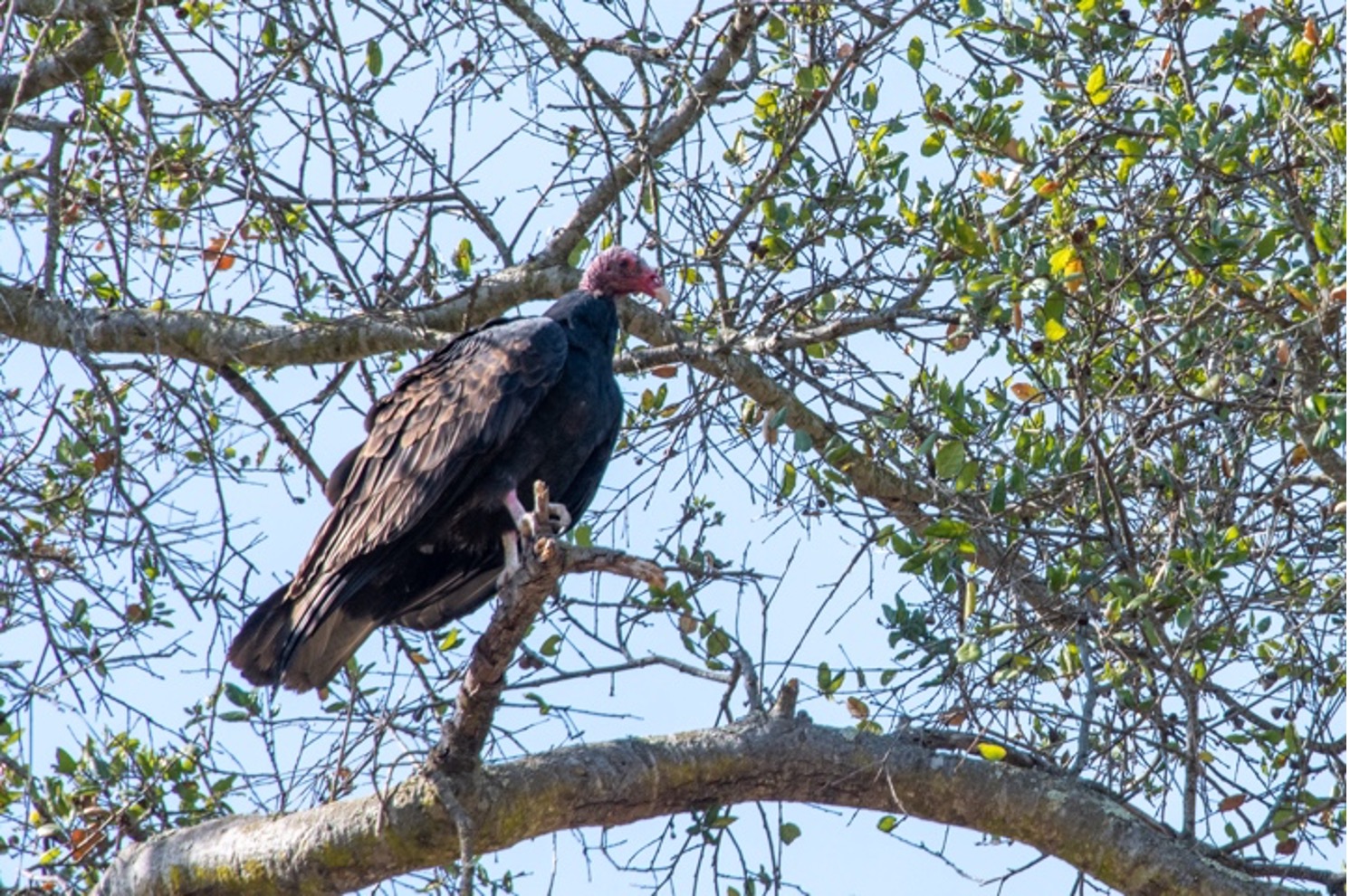
Turkey Vulture
Seeks carrion by soaring over open or partly wooded country, watching the ground and watching the actions of other scavengers. Can also locate some carrion by odor: Unlike most birds, has a well-developed sense of smell. Mostly carrion. Feeds mainly on dead animals, preferring those recently dead (that is, relatively fresh carrion). Occasionally feeds on decaying vegetable matter, live insects, or live fish in drying-up ponds. They have a wingspan of 6 feet, and they can fly for hours without tiring.
A group of Turkeys Vulture’s resting is called a “Committee.” The bald head allows the turkey vulture to easily find food by sniffing and wiping off rotting flesh from its face as it scavenges for carrion.
Turkey vultures live only in the Americas, from southern Canada all the way to the tip of South America. The turkey vulture's bald head helps it stay clean. When it reaches inside a carcass to feed, there are no feathers on its head to get messy, so bits of rotting meat don't stick to it. It finds food with its nose, which has a very good sense of smell.