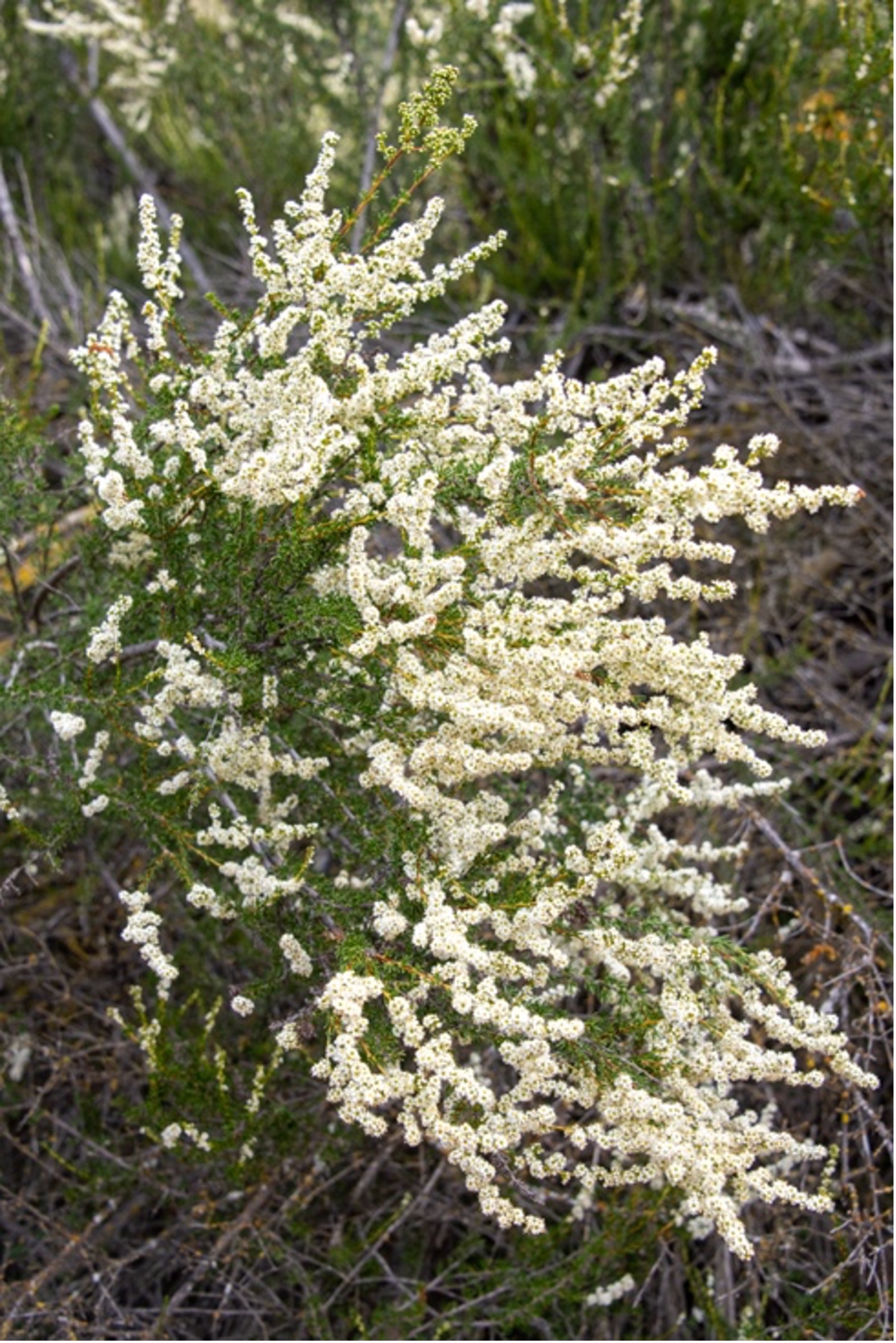
Chamise
Bush, white flowers, flammable – Chamise (or greasewood) is the dominant species in chaparral, which in turn is the dominant vegetation in California.
Like many chaparral species, chamise has small leathery leaves that resist water loss, making it very drought tolerant, and an enlarged, woody area at the base of the stems – a burl – that stores water and energy and facilitates rapid resprouting after a wildfire. chamise also has characteristics that seem to promote fire, such as small, resinous leaves that are highly flammable during the dry season (hence the common name greasewood)
The leaves are tiny and needle-like, only about 1/4 inch long, and grow in little bundles along the stems. In late spring and early summer, the tips of the branches are covered with clusters of tiny white flowers, which turn rusty brown as they dry.
The leaves and twigs contain oily, flammable compounds, which is where the name "greasewood" comes from, and why hillsides covered in chamise can burn so hot. But chamise is built to come back. It grows from a thick, woody base called a burl, buried just under the soil where the flames can't reach it. After a fire, new shoots sprout from the burl, and the heat of the fire also helps chamise seeds in the soil to sprout.
Native Californians, including the Kumeyaay and Cahuilla, used chamise as medicine, making a tea for cramps and chest ailments and using its oils to treat skin infections.